
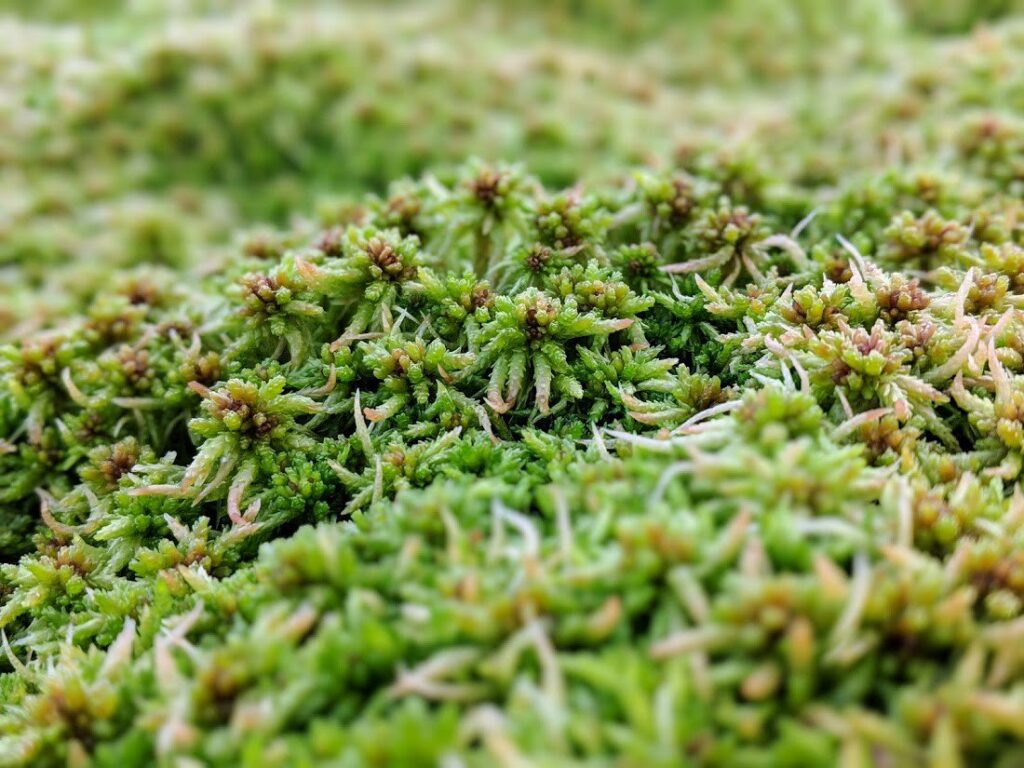
Sphagnum is a group of moss species that play a critical role in healthy peatlands. It is the primary plant responsible for forming peat, regulating water levels, supporting biodiversity, and locking up carbon over long timescales.
In intact bogs and fens, Sphagnum moss creates the wet, acidic conditions that allow peat to accumulate. Where peatlands have been damaged or drained, the loss of Sphagnum is often the key barrier to recovery.
What is Sphagnum moss?
Sphagnum moss refers to a genus of mosses made up of many different species, each adapted to slightly different conditions. Together, they dominate the surface of natural peatlands across the UK, Ireland and northern Europe.
Unlike most plants, Sphagnum moss can hold many times its own weight in water. This unique structure allows it to keep peatlands waterlogged, slow decomposition, and create conditions where peat can form.
Over time, dead sphagnum material accumulates as peat, making Sphagnum moss the foundation of peatland ecosystems.
Why is Sphagnum moss important?
Sphagnum moss is often described as a foundation species because so many peatland functions depend on it.
Key benefits include:
– Water regulation: helping peatlands retain water and maintain stable water tables
– Carbon storage: slowing decomposition and supporting long-term carbon storage
– Biodiversity recovery: supporting specialist plants, insects and birds
– Peat formation: enabling peat to accumulate rather than erode
Without Sphagnum, peatlands struggle to function as wetlands and carbon stores.
Sphagnum moss and peatland restoration
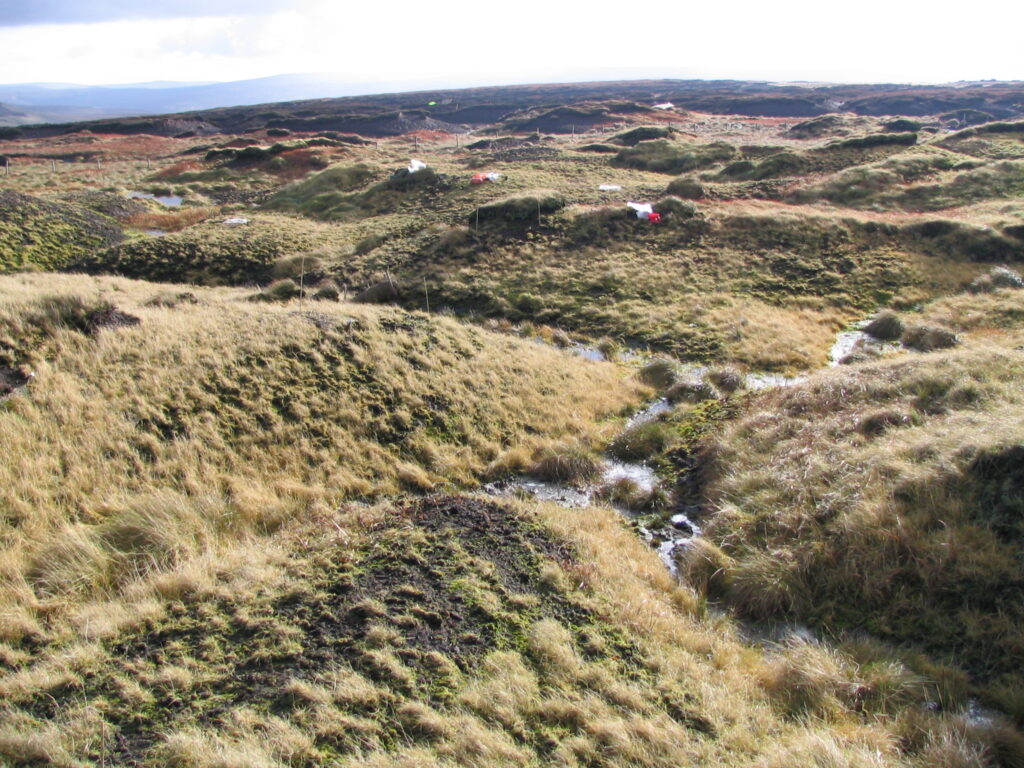
In degraded peatlands, restoration often starts with rewetting. While essential, rewetting alone does not always lead to full ecological recovery.
On sites with extensive bare peat or erosion, Sphagnum may be slow or unable to return naturally. Active reintroduction of sphagnum can stabilise surfaces, accelerate recovery, and support the development of functioning bog vegetation.
How is Sphagnum moss re-introduced?
Common approaches include spreading fragments, translocating small clumps, or planting Sphagnum plugs grown in controlled conditions. For projects requiring reliable and accelerated Sphagnum coverage, most organisations opt for planting BeadaHumok® Sphagnum plugs. The most appropriate method depends on site conditions and scale.
Micropropagated Sphagnum moss
Micropropagation allows Sphagnum to be grown at scale without damaging donor sites. It produces consistent, high-quality planting material tailored to restoration conditions.

Sphagnum, peat and peat-free alternatives
Sphagnum moss is a living plant. Peat is partially decomposed plant material formed largely from sphagnum over thousands of years. Historically peat has been harvested from peatlands for fuel and horticulture. This has led to 80% of the UK’s peatlands being in degraded. The best way to protect and restore our peatlands is to rewet them and introduce Sphagnum moss and other wetland plants.
Frequently Asked Questions
What is Sphagnum moss used for?
Sphagnum moss is used in peatland restoration to help mitigate carbon emissions, sequester carbon, increase biodiversity, help water quality and flood management and mitigating wildfire risk. Sphagnum is also farmed for use in horticulture as an alternative to peat harvested from nature.
Is Sphagnum moss the same as peat?
No. Sphagnum moss is a living plant; peat is accumulated dead organic material, predominantly made up of Sphagnum mosses.
How long does Sphagnum take to establish?
Timescales vary by site, but establishment typically takes several years.
Can Sphagnum be grown sustainably?
Yes. Through farming and micropropagation methods. We grow our Sphagnum moss for restoration in glasshouses where we harvest rainwater and utilise a large solar PV array and ground-source and air-source heat pumps.
Working on a Peatland Restoration project?
If you’re planning or delivering peatland restoration and want to understand how Sphagnum revegetation fits into your site, get in touch with us.


